




The Energy Revolution System: A DIY Tesla-Inspired Power Booster

The Energy Revolution System DIY renewable energy system for home and off-grid power

The Energy Revolution System is a downloadable guide that shows you, step by step, how to build a compact electromagnetic booster coil at home. The design is based on Nikola Tesla's 1894 Bifilar Pancake Coil patent, and every part of the build uses ordinary materials you can pick up at a hardware store. The finished device helps a small input source — a battery or solar panel, for example — power connected loads a little more efficiently. Clear diagrams and plain-language instructions mean beginners can put together a working unit to help run lights, fans, and other small electronics.

Think of it as a hands-on side project, not a stand-in for your household power supply. It's "green" in the sense that it squeezes more usable output from a small renewable source, and its small, portable build makes it easy to take camping or keep ready for outages. Most builders take it on to run a few small loads and pick up real electronics skills in the process — a solid pick for DIY tinkerers and energy hobbyists alike.

The Energy Revolution Builder Reviews

The Energy Revolution System Review  Two

Sarah T., Oregon

⭐⭐⭐⭐⭐

"As a renter, I needed something portable that wouldn't require any installation. I built mine in an afternoon and now use it to top up my laptop and a couple of lamps. It's not running my whole apartment, but it's shaved a little off my bill and was a fun project."

The Energy Revolution System Review one

John M., Texas

⭐⭐⭐⭐⭐

"I went into this expecting a miracle and got something better: realistic expectations and a working device. It now handles my porch lights and a couple of fans, which knocks roughly $30 off my monthly bill. The guide was easy to follow even though I'd never built anything electrical before."

The Energy Revolution System Review Three

Mark D., Florida

⭐⭐⭐⭐⭐

"I'd never built anything like this before, but the diagrams made it manageable over a weekend. I'm using it as backup for my phone chargers and a small fan during outages. It's a nice supplemental setup — just don't expect it to replace your whole electric bill."

What Is The Energy Revolution System?

Step-by-step guide of The Energy Revolution System converting renewable energy into electricity

The Energy Revolution System is a digital guide that shows homeowners how to build a small, Tesla-inspired electromagnetic coil using cheap, easy-to-find materials. It's worth being upfront: this isn't a free-energy device, and it won't take the place of your utility hookup. It's a genuine, do-it-yourself electronics project that anyone with a bit of patience can take on, no matter their technical background.

The build centers on the Bifilar Pancake Coil, a coil design Tesla actually patented in 1894 (US Patent No. 512,340). Winding two wires together in a flat spiral — the "bifilar" part — cuts down certain resistive losses and shifts the coil's capacitance and resonant behavior compared with a standard single-wound coil. The practical upshot: a small input source, such as a battery or solar panel, can run connected loads somewhat more efficiently, wasting less energy as heat.

To be clear, the coil doesn't produce energy out of nowhere — it still needs something feeding it. That said, plenty of builders use it as a supplemental setup for small loads like LED lighting, fans, and charging devices. It also doubles as a handy backup during short outages, and unlike solar panels or turbines, its performance doesn't hinge on sunlight or wind — just on having an input source hooked up. Builders typically report shaving a modest amount off their monthly bill, often somewhere in the $20–$50 range depending on what they're running, rather than any dramatic whole-home savings.

How Does The Energy Revolution System Work?

The Energy Revolution System guide takes you through the process of building your own compact power-efficiency device at home. Centered on the Tesla-inspired Bifilar Pancake Coil, the design helps a small input source run connected loads while wasting less energy as resistive heat. For most builders that adds up to a modest dip in monthly electricity costs — usually in the $20–$50 range on smaller loads, not a full replacement for grid power.

Here's the mechanism at play: the bifilar winding's distinctive geometry shifts the coil's resonant and capacitive properties compared to a standard coil, which can cut down certain energy losses during transfer. It's a legitimate piece of electrical engineering — not a way to conjure energy from nothing — so it's best understood as a small-scale efficiency gain rather than a way to zero out your utility bill.

What keeps the build approachable is how simple it is. There's no need for an electrical engineering background — just some patience and basic tools — to follow the illustrated, step-by-step instructions over a few hours. Plenty of first-timers finish the project and put it to work powering small devices.

There's a limited amount of room to scale up: start with small loads like LED lights or a fan, and some builders expand from there, though bigger appliances like refrigerators or air conditioners are well outside what this device can support. Once built, it needs very little upkeep.

The Energy Revolution Vs Other DIY Energy Options – Comparison

The Energy Revolution System vs other DIY energy options comparison chart

Set alongside other DIY energy projects, the Energy Revolution System carves out its own space: quicker and cheaper to build than a solar or wind setup, but it also handles a much smaller slice of your power needs. Conventional DIY power sources — solar panels, wind turbines, micro-hydro setups — can generate real, measurable electricity, but they come with pricier equipment, trickier installation, and ongoing upkeep.

Solar and wind are both weather-dependent — panels lose output on cloudy days, turbines need steady wind to do anything. The Energy Revolution coil sidesteps that, but only because it isn't pulling primary power from the environment in the first place. It still needs a connected input source, like a battery or small solar panel, and its role is to squeeze more out of that input rather than replace it.

Where the Energy Revolution System pulls ahead is cost, at least for a small project. A typical home solar setup can run into the thousands of dollars and take weeks for professional installation. This build, on the other hand, generally costs around $39 for the guide plus roughly $70–$100 in hardware-store materials, and can go together in an afternoon with no professional install needed.

Benefits Of The Energy Revolution System

The Energy Revolution System Is A Hands-On Project With Real, Practical Upsides For The Right Person. Here's What Draws Builders In:

  1. Modest, Genuine Savings – Builders commonly shave roughly $20–$50 off their monthly bill by offsetting small loads like lighting, fans, and charging — not a full bill replacement, but a worthwhile supplement.
  2. Beginner-Friendly Build – No engineering degree required. Clear, step-by-step instructions let most people finish the build in an afternoon.
  3. A Small Move Toward Self-Sufficiency – Cuts some reliance on the grid for small loads while teaching practical skills you can build on.
  4. Real Educational Value – A genuine, hands-on way to explore electromagnetic principles, including the resonance and capacitance effects of bifilar coil windings.
  5. Portable Backup Power – Small and lightweight — handy for camping, remote cabins, or as light backup for small devices during short outages.
  6. Low Maintenance – Once assembled and running, the coil needs very little ongoing upkeep.
  7. Weather-Independent Operation – Unlike solar or wind, performance doesn't hinge on sunlight or wind speed — only on the input source you connect.
  8. A Satisfying Hands-On Project – An affordable weekend build for DIY enthusiasts and energy hobbyists who like building things themselves.

Build A Tesla-Inspired Power Booster And Trim Your Bills — Realistically

Eco-friendly renewable energy with The Energy Revolution System

The Science Behind The Bifilar Pancake Coil

The science behind the Energy Revolution System traces back to a genuine slice of electrical-engineering history: Nikola Tesla's 1894 Bifilar Pancake Coil patent (US Patent No. 512,340). Instead of the single-wire winding found in standard coils, this coil is wound from two parallel wires laid out flat in a spiral. That arrangement changes the coil's distributed capacitance and resonant frequency compared to a conventional design.

One real-world effect of this geometry is lower self-inductance and reduced resistive losses at certain frequencies — meaning less input energy gets wasted as heat during transfer. That's a genuine efficiency gain at small scale. It is not a means of generating energy from nothing, and, per the basic laws of physics, the energy coming out of the system can never exceed what goes in.

Put simply: feed the coil a small amount of power from a battery or solar panel, and the bifilar design helps you put more of that energy to productive use, with less lost to resistance — it doesn't manufacture free or unlimited power. That's why the benefit shows up with smaller loads — LED lighting, fans, charging — rather than running an entire household.

Tesla's broader work on electromagnetic induction and resonant circuits genuinely reshaped how electricity is generated and distributed today. The bifilar pancake coil is one of his lesser-known but authentic patents, and building one is a legitimate, educational way to engage with that history — as long as your expectations for a small DIY coil stay realistic.

How To Get Started With The Energy Revolution System

Getting started with the Energy Revolution System is simple, even if you've never touched anything electrical before. No engineering background required — the guide is written for regular homeowners and hobbyists after a practical, low-cost project and a small boost to their energy use. With a clear, step-by-step guide and materials that are easy to track down, you can put together your own coil booster in a few hours.

Step one is downloading the guide itself, which comes with a full materials list and detailed assembly instructions. Most of what you'll need — copper wire, magnets, basic tools — can be found at your local hardware store or online, running roughly $70–$100 in total, separate from the guide's own price.

With materials in hand, work through the illustrated instructions at your own pace. It takes some patience, but it's built for beginners. Along the way you'll assemble the Bifilar Pancake Coil, wire up the circuits, and configure everything safely, with safety notes and diagrams at each step.

Once the build is finished, set it up wherever's convenient — a garage, basement, or small workspace all work fine given how compact and portable it is. Hook it up to a small input source, like a rechargeable battery or solar panel, and you're ready to go.

How To Use The Energy Revolution System

Putting the Energy Revolution System to use is a manageable weekend project, even if you're starting from zero. It comes down to a handful of clear steps for setting up, running, and maintaining your coil as a modest, ongoing supplement to your power use.

Start by pulling together the materials and basic tools listed in the guide: common items like copper wire, magnets, and small electronic components, all affordable and easy to find at hardware stores or online. You'll also want simple tools like pliers, a screwdriver, and a soldering iron. The manual lays out exactly what to have ready ahead of time.

From there, work through the step-by-step assembly instructions. The build follows Tesla's Bifilar Pancake Coil design, which helps a small electrical input run connected loads a touch more efficiently. Detailed diagrams and safety tips throughout the guide keep the build smooth and secure, even with zero prior technical experience.

Once assembly's done, place your unit wherever's convenient — a garage, basement, or small workspace — since it's compact and portable. Connect it to a small input source, like a rechargeable battery or solar panel, to get it running.

From there, hook up small household loads to test things out — LED lights or a fan are a good starting point before adding anything else. Keep your expectations focused on small electronics and lighting rather than major appliances; the system isn't built or intended to run refrigerators, air conditioners, or whole-home circuits.

Upkeep is minimal — just check your connections and components from time to time. Given its low-voltage design, the build should hold up safely with reasonable care, like most DIY electronics projects.

Who Should Build The Energy Revolution System?

The Energy Revolution System suits people after a hands-on, affordable way to learn about electromagnetism while trimming a little off their electricity costs — not anyone expecting it to replace a utility connection or power a whole house.

If you're a homeowner hoping to cut your monthly bill on smaller loads — lighting, fans, device charging — this is a reasonable fit. Builders commonly report savings in the $20–$50 per month range, a real if modest dent in recurring costs, especially weighed against the one-time cost of the guide and materials.

It's also a good match for renters and apartment dwellers after a small, portable energy project without installing anything like solar panels or wind turbines. Its compact build allows setup almost anywhere — a small apartment, rented home, or temporary living space — with no major installation or property changes needed.

And it can come in handy for families in rural or off-grid areas dealing with occasional power interruptions who want a small backup option for essential small electronics, paired with a charged battery or portable solar panel.

Start Your DIY Build And See Real, Modest Savings

Save money on electricity bills with The Energy Revolution System

Why Consider The Energy Revolution Guide?

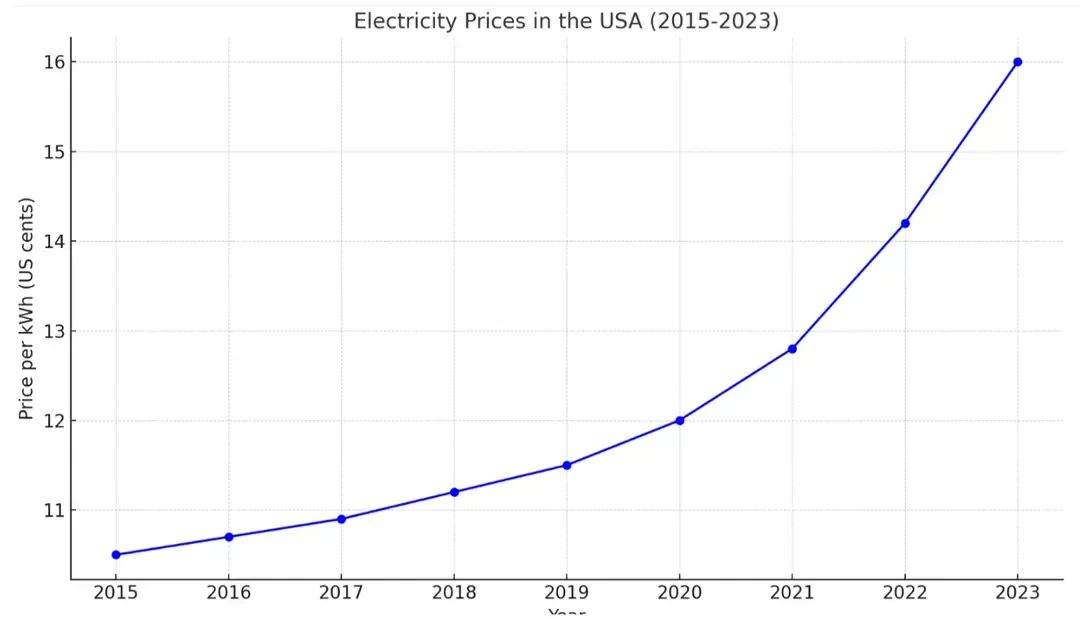
The Energy Revolution Guide won't magically erase your electricity bill — it's a practical, affordable DIY project that can chip away a small, genuine amount from your monthly costs while teaching you something real about electromagnetism. With energy prices on the rise and outages growing more common in some areas, having a small backup option and a better grasp of your own power use has real value, even at a modest scale.

One good reason to consider it is the cost-to-benefit ratio for a starter project. For roughly $39 for the guide plus $70–$100 in materials, you get a working device that offsets $20–$50 a month on smaller loads for many builders — a reasonable return for a one-time, low-cost project, even though it won't cover your whole utility bill.

Another reason is the small dose of backup capability it offers. It won't keep your whole home running during a blackout, but it can keep small essentials — lighting, charging, a fan — going, provided you've got it connected to a charged battery or portable solar panel beforehand.

It also appeals to anyone into sustainability and hands-on learning. It teaches you to squeeze more out of a small renewable input, a worthwhile habit even at modest scale, and it's a genuinely interesting way to engage with real Tesla-era electrical engineering.

Pros And Cons Of The Energy Revolution System

Pros

Real, Modest Savings: Builders commonly see roughly $20–$50/month offset on smaller loads.

Light Backup Capability: Helps keep small essentials running during short outages, given a charged input source.

Beginner-Friendly Build: Clear instructions built for beginners — no engineering background needed.

Educational: A genuine, hands-on way to explore real electromagnetic principles.

Weather-Independent: Doesn't depend on sun or wind — just the input source you provide.

Portable & Low-Maintenance: Compact, easy to move, minimal upkeep once built correctly.

Affordable Starter Project: A low-cost alternative to bigger renewable-energy commitments.

Cons

Hands-On Effort Required: Involves manual assembly and some patience — not a plug-and-play product.

Not a Grid Replacement: Won't power a whole home, run large appliances, or replace your utility bill.

Still Needs an Input Source: Requires a battery or solar panel to function — it boosts efficiency rather than creating energy from nothing.

Basic Knowledge Helps: A little familiarity with safety and simple circuits makes the build go more smoothly.

Who Created The Energy Revolution System?

The Energy Revolution System guide draws directly on the documented work of Nikola Tesla, built around his 1894 invention of the Bifilar Pancake Coil (US Patent No. 512,340) and adapted into a modern, beginner-friendly DIY format anyone can build at home.

The people behind it focused on keeping the build accessible, affordable, and approachable — simple materials, clear step-by-step instructions. The aim is to help people pick up practical electronics skills, trim a bit off small-load electricity costs, and get hands-on with real electromagnetic engineering.

A growing community of DIY builders and energy hobbyists has taken on the project and shared their results — proof that realistic, well-understood projects can still be genuinely worthwhile without needing exaggerated claims to back them up.

The Energy Revolution Money Back Guarantee

60-Day Money-Back Guarantee, No Questions Asked

Every purchase of the Energy Revolution System guide comes with a 60-day money-back guarantee through ClickBank. If you build the system and decide it's not for you, or it just doesn't fit your needs, you can request a full refund within 60 days of purchase.

That guarantee gives you a low-risk way to try the project firsthand. You get a real digital guide, a real materials list, and a real DIY build — just come in with realistic expectations about what a small coil booster can do, and use the guarantee window to decide if it's right for you.

60-day money-back guarantee with The Energy Revolution System

The Energy Revolution Frequently Asked Questions

The Energy Revolution System is a digital DIY guide that teaches you to build a small home power-efficiency device inspired by Nikola Tesla's Bifilar Pancake Coil. It uses everyday materials to help a small input source run connected loads a bit more efficiently, which can modestly reduce your electricity costs on smaller appliances.

The bifilar coil design changes the resonant and capacitive properties of the windings compared to a standard coil, reducing some resistive losses when a small input source — like a battery or solar panel — runs connected loads. It improves efficiency at a small scale; it does not generate energy from nothing.

No technical expertise is required. The guide includes easy-to-follow, step-by-step instructions and diagrams, allowing most beginners to assemble it successfully in a few hours.

Most builders report savings in the $20–$50 per month range, on smaller loads like lighting, fans, and charging. It's a genuine but modest reduction — it will not eliminate your bill or power large appliances.

Yes. Its compact, lightweight design makes it portable and adaptable for various living spaces, including apartments, houses, and off-grid cabins.
It's best suited for small loads — LED lights, fans, phone and laptop charging. It is not designed for large appliances like refrigerators or air conditioners, and isn't a substitute for your main electrical supply.

Yes. The Energy Revolution System comes with a 60-day, no-questions-asked money-back guarantee through ClickBank, giving you a low-risk way to try it.

The build operates at low voltage, which reduces risk during assembly and use. The guide includes safety notes, but as with any electrical project, follow instructions carefully and use common sense around wiring and connections.

Most builders can assemble the device in a few hours using the included materials list and step-by-step guide. No prior electronics experience is required, though some patience helps.

The guide is available for purchase through the official website, with instant access to the complete materials list and instructions after checkout.

"What Happens After I Click The "Buy Now" Button?"

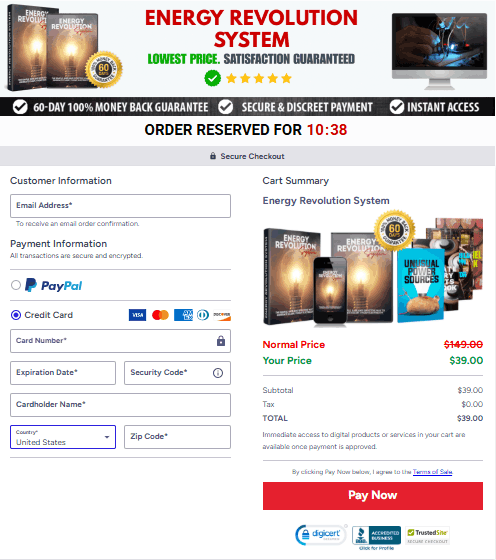
After Clicking The “Buy Now” Button Below, You'll Be Directed To Our Secure Checkout Page. Enter Your Details, And You'll Get Instant Access To The Complete Energy Revolution System Guide Right Away.

Secure checkout for The Energy Revolution System DIY program

How Safe Is My Credit Card Information On Your Website?

Your payment security is a priority. When you purchase the Energy Revolution System guide, transactions are handled through encrypted checkout to keep your sensitive details safe. We do not store your financial information ourselves.

Payments are processed by ClickBank, an established online retailer that handles secure transactions for digital products. Their systems are built to guard against fraud and protect your personal data.

You can place your order knowing both this website and ClickBank's checkout system are built to safeguard your privacy at every step.

Remarks

The creators of the Energy Revolution System stand behind their guide with a straightforward, customer-first refund policy. Every purchase comes with a 60-day, 100% money-back guarantee through ClickBank, giving you the freedom to try the project without financial risk.

If, for any reason, the Energy Revolution System guide doesn't meet your expectations or isn't a good fit, you can request a full refund within 60 days — no questions asked. Go in with realistic expectations about what a small DIY coil booster can do, and use the guarantee window to decide if it's right for you.

Email : support@theenergyrevolution.com

Get Your Discounted Guide Before The Offer Ends

Reliable backup power during outages with The Energy Revolution System

Disclaimer

The Energy Revolution System is a do-it-yourself digital guide inspired by historical electrical-engineering patents and is provided for educational and personal use. It is not a free-energy device, does not generate electricity from nothing, and will not replace your primary utility connection. Results vary based on the input source used, build quality, individual effort, and what you connect to the device — typical builders report modest savings on small loads rather than dramatic bill reductions.

ClickBank is the authorized retailer for products on this website. CLICKBANK® is a registered trademark of Click Sales Inc., a Delaware corporation located at 1444 South Entertainment Avenue, Suite 410, Boise, Idaho 83709, USA, and is used with permission. The involvement of ClickBank as the retailer does not represent an endorsement, approval, or review of this product, nor any claims, statements, or opinions expressed in its promotion.